



History of Tunisia
Geography of Tunisia
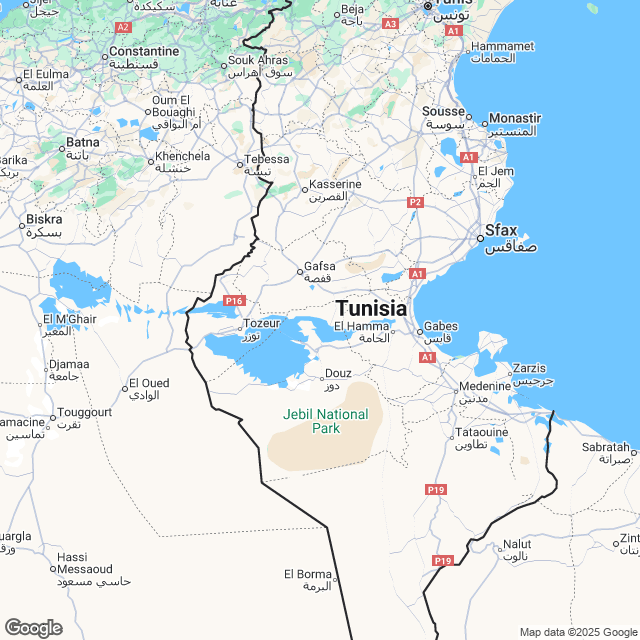
Tunisia is found in North Africa along the coast of Mediterranean sea. Libya and Tunisia share the Tunisian border on the south-eastern and the western regions respectively. The country has a coastline of about 1498 kilometers and the dorsal edge of the Atlas Mountains cut through the north-eastern parts of Tunisia. The presence of the Sahara desert extension in the southern regions of Tunisia make them semi-arid and desert while the central plains are usually dry and hot. The northern parts of Tunisia are mountainous and as you move to south, you encounter the central plains. Shatt al Gharsah, lying at 17 meters above the sea level is the lowest point while Jebel ech Chambi at 1544 meters is the highest point in Tunisia.Climate of Tunisia
The presence of the Mediterranean Sea in the north modifies the temperate climate in the region to the hot summers from May to September and rainy winters from October to April while the southern parts are desert due to the influence of the Sahara desert. The coastal temperatures are moderate while the interior south the temperatures are high.Natural Resources in Tunisia
The Mediterranean Sea provides the great fishing sites in Tunisia while the Majardah, the only perennial river in the country provides water used for irrigation. The country also has the mineral deposits such as iron ores, zinc and lead. Several wells of petroleum and phosphates deposits are also found within the country's territory.Tourist Attraction in Tunisia
Being a destination for the beach lovers, Tunisia has extended surprises, ancient and current, exotic and indigenous and even the cultural and natural riches which decorate the country's land. The magnificent cities of Tunisia include:- Tunis
- Sfax
- Sousse
- Kairouan
- Ettedhamen
- Gabes
Famous Hotels in Tunisia
Some of the best luxurious, family-friendly and quiet hotels in Tunisia where you can comfortably enjoy your visit in the country include:- Novostar Palmyra
- Hasdrubal Prestige Thalassa and spa
- Scheherazade hotel Sousse
- Hotel Riu Palace Oceana Hammamet
- Hotel Belvedere Fourati
- Hotel Bel Azur Thalassa
Tunisia Culture and Cuisine
Romans, France and other outside groups who interacted with the Tunisian people had a great influence on the culture of the country. Tunisia was greatly linked to contemporary painting from the ancient days of the School of Tunis and up to date, there are more than 50 exhibitions with art galleries of the Tunisians and other international artistes. The Arab Andalusian, religious and the secular music are the practiced in the current Tunisia while the French and the Arabic literature passed to the new generation in the schools. The distinctive spicy fieriness and other culinary ingredients such as the condiments and flavoring dominate the Tunisian cuisine. Farm animals such as beef and chicken; fish and sea foods are the primary sources of proteins while fruits such as oranges and dates, together with various vegetables, accompanies the daily meals enjoyed within the country.International and Domestic Airports in Tunisia
- Djerba-Zarzis international airport
- Enfidha international airport
- Gabe's international airport
- Monastir Bourguiba international airport
- Tabarka Draham international airport
- Tunis-Carthage international airport
Posted By : All Places Map Last Updated: September 13, 2015
Flag of Tunisia

Facts about Tunisia | |
|---|---|
| Country | Tunisia |
| Continent | Africa |
| Capital | Tunis |
| Government | Republic |
| Independence Day | 20-Mar-56 |
| Climate | Mediterraneanin north, Arid in south |
| Area | 163,610 sq km |
| Currency | Tunisian Dinar (TND) |
| Dialling Code | 216 |
| Neighbours | Tunisia, Libya |
