



History of Trinidad and Tobago
Geography of Trinidad and Tobago
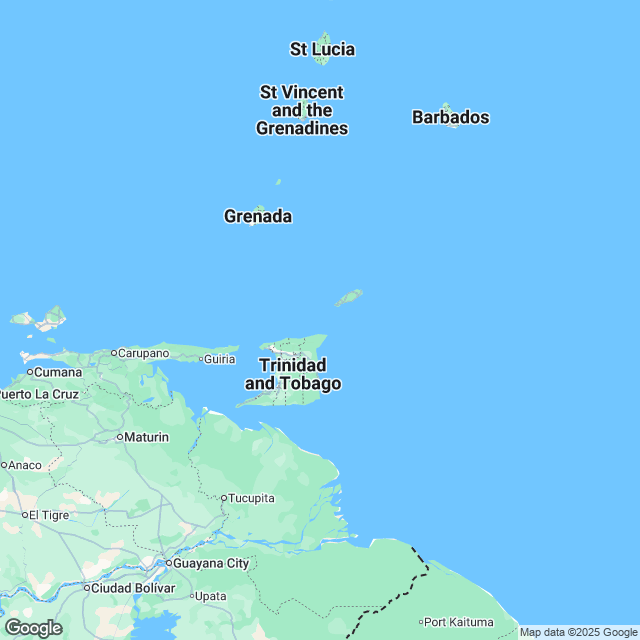
Barbado and Grenada share the maritime boundaries with Trinidad and Tobago in the northeast and northwest respectively while Guyana and Venezuela share the border of the state in the southeast and southwest respectively. Trinidad Island covers an area of about 4768 square kilometers while Tobago covers an area of about 300 square kilometers but other small land forms are also found within the islands. The country has a coastline extending for about 362 kilometers with most parts of the island covered by plains while others have hills and low mountains. The Caribbean Sea lies at zero meters and is the lowest point whiles El Cerro del Aripo is the highest point at 940 meters above the sea level.Climate of Trinidad and Tobago
Trinidad and Tobago experiences tropical climate with the humidity relatively high. The country goes through both the dry and rainy seasons with January and February being the coolest months while April and May are the warmest months. The sea breezes interfere with the climate within the coast, and the temperature varies between the day and night. The northeast trade winds dominate the land. Although the country is not within the hurricane zone, Tobago is sometimes struck by the destructive waves of the hurricane.Natural Resources in Trinidad and Tobago
The commercial petroleum wells are the main source of income in the state through its exportation. The use of petroleum as the source of energy is also substituted by the natural gas available within the state. Lake pitch has large quantities of asphalt deposits and even other natural minerals such as sand and gravel, iron ores, limestone and fluorspar deposits and gypsum are also found within the country.Tourist Attraction in Trinidad and Tobago
Although Trinidad and Tobago fall under the same nation, the two islands differ in the concentration of the natural resources and other attractive scenarios which create a great interest for many tourists over the world.The top five cities in Trinidad and Tobago which one can be comfortably accommodated and secured include:
- Laventille
- Chaguanas
- Mon Repos
- San Fernando
- Port of Spain
Famous Hotels in Trinidad and Tobago
The luxury hotels in Trinidad and Tobago with at most security and excellent services to the customers include:- Holiday Inn Express Trincity
- Coco Reef Tobago
- Magdalena Grand beach and Golf Resort
- Hilton Trinidad and Conference center
- Courtyard by Marriott Port of Spain
Trinidad and Tobago Culture and Cuisine
There are cultural influences and regional differences between the two islands despite being in the same nation. Carnival celebrations brought by the French is usually confined to the high class and elite in the nation. During Christmas, Diwali (Hindi festival) and Hosay, the parang traditional songs are usually sung. Hindus and Roman Catholics are the dominating religions in the state although smaller religions such as the Muslim and Methodists exist. Indian and African interactions with the Europeans and the Chinese have influenced the cuisine of Trinidad and Tobago. Roasted eggplant and fried long beans are served with thesada roti during the breakfast, African root spicy and creamy callaloo with pumpkins and stew can be consumed over the lunch. Mangoes, pawpaw and watermelons are among the fruits and malt, Guinness beer and citrus juices are among the beverages taken in Trinidad and Tobago.International and Domestic Airports in Trinidad and Tobago
- Piarco international airport
- A.N.R. Robinson international airport
- The Crown Point airport
- Gerald's airport
Posted By : All Places Map Last Updated: September 13, 2015
Flag of Trinidad and Tobago

Facts about Trinidad and Tobago | |
|---|---|
| Country | Trinidad and Tobago |
| Continent | North America |
| Capital | Port-of-Spain |
| Government | Parliamentary Democracy |
| Independence Day | 31 August, 1962 |
| Climate | Tropical |
| Area | 5,131 sq km |
| Currency | Trinidad and Tobago dollar (TTD) |
| Dialling Code | 1-868 |
| Neighbours | N/A |
