



History of Switzerland
Geography of Switzerland
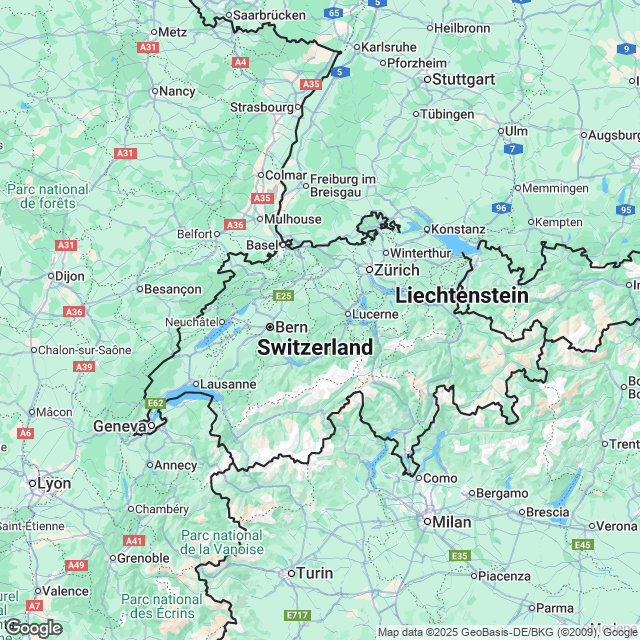
Switzerland is located to the east of France and to the north of Italy. Mountain landscape and small mountain village are its recognition. It is mainly mountainous with Jura in the northeast and the Alps in the south. Many large lakes, rolling hills and plains are present throughout; making it a central plateau. There are many peaks at high elevation, but Dufourspitze at 15,203 feet Switzerland's highest and most famous is Hatter horn near the town of Zermatt in Valais.Climate and Natural Resources of Switzerland
Switzerland has a temperate climate which varies with altitude cold and rainy to snowy winters and cool to warm and sometimes humid summers are experienced in most of the country. There is an average January low temperature of 23.3F and an average July high of 74.3 F in Bern, the capital of Switzerland. The high Alps and Ticino Catona experience wettest conditions which sun and rain from time to time precipitation moderate during summer. Through winter receives less precipitation. Yet it is the most stable climate system with autumn happens to be the most.Water power is the chief natural resource of Switzerland. The principal source of water is runoff from the considerable annual precipitation that falls on the Alps. Today the flow is captured by hundred of hydroelectric power facilities which provides 59% of the country's domestic electricity, Granite, limestone, other building stones and salts are only mineral resources. Small deposits of iron and manganese are also found about 11% of the Switzerland is used for agriculture, while 30% covered by forest.
Tourist Attraction in Switzerland
The tourism sector is developed in Switzerland. The country earns a lot of revenue. There are below given number of tourist places that attract the visitors from the foreign countries.- The Jungfrau region
- Chateau La Chillon montsuex
- Swiss national park zernua
- Fasnacht spring carnival basel
- Gensua
- The Htterhorn Zunatt
- St. horitz
- St. Pilatus
- The Rhine fall
Famous Hotels in Switzerland
- Baur air lac
- Wider hotel
- The Dolder Grand
- Hotel d'Angleterra
- La Reserrue Geneva Hotel
- Four Season Hotel Des Brgeus Geneua
- Belleveer Palace
- Hotel Schweizerhof Bur
- Beau-Revage Palace
- Les Trios Rois
Switzerland Culture and Cuisine
Swiss culture reflects a wide range of tradition, thus characterized by diversity. These of Europe major languages are official. During time of unrest and war in Europe, Switzerland attracted number of creative people and thus brought a home for many contribution in literature, art, music, science etc . Folk art is kept alive forever in Switzerland. Switzerland expression is music, dance, poetry, wood craving etc. The wooden musical instrument named Alphorn; become yodeling and the accordion an epitome of Swiss traditional music.They prepare food varies greatly bread items. Dairy products such as milk, yoghurt, butter and of-course, the famous Swiss cheese is an equally varied vegetable like beans; carrot, etc. are served in different ways. Side dishes such as French fries and different type of pasta. Fruits like berries, apple, blueberries, raspberries, red currants, etc. are available. Switzerland is world famous for its Swiss chocolates.
International and Domestic Airports in Switzerland
- Alternrhun airpot
- Ascena airport
- Emmer aiport
- Genuea lointrin airport
- Euro airport
- French airport
- Samedan airport
- Zurich airport
Posted By : All Places Map Last Updated: September 13, 2015
Flag of Switzerland

Facts about Switzerland | |
|---|---|
| Country | Switzerland |
| Continent | Europe |
| Capital | Bern |
| Government | Unitary |
| Independence Day | August 1,1291 |
| Climate | Temperate and Tundra |
| Area | 41,300 sq km |
| Currency | Swiss Franc (CHF) |
| Dialling Code | 41 |
| Neighbours | Austria, France, Italy, Liechtenstein, Germany |
