



History of Sri Lanka
The ancient history of Sri Lanka says that, original name of Sri Lanka is the yakshas and Nagas, but Sinhalese history started in 543 BC with the arrival of prince Vijay or Singha, a prince who sailed with his followers on eight ships and came to Sri Lanka. He established the kingdom of Tambapani, second largest rivers of Sri Lanka was connecting the sacred city, Anuradhapura to Myanmar. It was used by the Greeks and Chinese as waterways for travelling the southern routes. Manner was the only port of that time, which linked Sri Lanka to India and the Persian Gulf. It was the first Asian country to have female rulers. Sri Lanka dynastic history ended when the land became part of the British Empire.
Geography of Sri Lanka
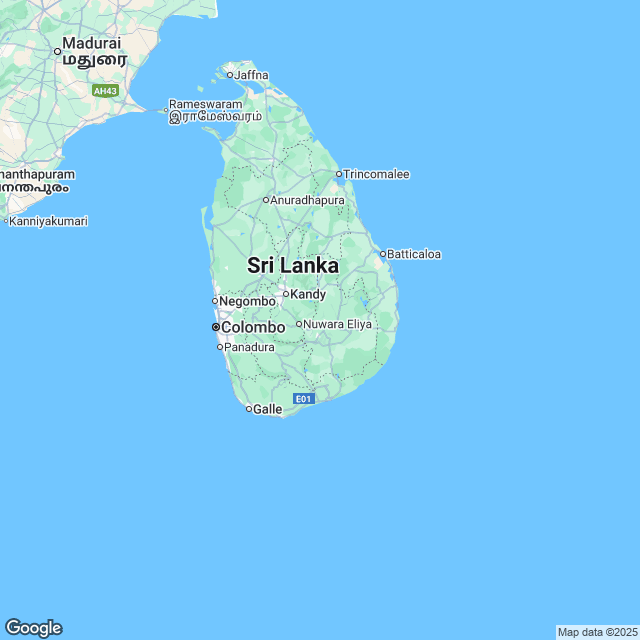
Sri Lanka lies on the Indian plate, a major tectonic plate. It is in the Indian Ocean south of the bay of Bengal. Sri Lanka is separated from the Indian subcontinent. It is an island off to southern of Indian state, Tamil Nadu. It now amounts to only a chain of islands called Adams Bridge. It mostly consists of flat to rolling coastal plains running inland with mountains rising only in the south central part. The highest point is pidurutalagala, reaching 2524 meters above sea level.The country's coast, mainly consists bays, beaches and mountain areas in the southwest, northeast and eastern part. Humidity is higher in the southwest due to the location of mountain ranges and depends on the seasonal pattern of rainfall, whereas the northern and eastern parts falls in the west zone of the central part in the south and west which receives 4000 mm of rainfall annually.
Sri Lanka is one of the biodiversity hotspots in the world. There are major national parks, which lie in northwest and southeast, which are designated as to protect the biodiversity of the country’s wildlife.
Climate of Sri Lanka
Sri Lanka climate can be described as tropical, and quite hot. The rainfall pattern is generally influenced by monsoon winds. The western and southern regions experience abundant rainfall in the month of May to September brought in by Yala monsoon. These regions are generally dry in the months of December till March. Rainfall usually lasts from October to January in the regions of northern and southern part. They usually experience a dry season from May to September, and these regions are usually affected by Maha monsoon. Another inter-monsoonal period occurs which brings rain and thunderstorm frequently across the island in the month of October and November.Natural Resources in Sri Lanka
Natural resources include limestone, graphite, mineral sands, gems, phosphate, clay, and hydropower. Gems are among the chief mineral mined and exported.Tourist Attraction in Sri Lanka
For centuries it has been a tourist destination. In 2012, Sri Lanka has been named as the best valued destination for holidays. Tourist applied to Sri Lanka and exceeded 4.5 million in 2014.Beaches
Negombo, Mount Lavinia, Kalutara Bentota, Matara, Tangalle, Arugam Bay, Pasiikudah, Nilaveli and Uppuveli.
Religious Sites
Gangarma Temple, Jami Cll-Afr Mosque, Temple of scared tooth relic.
Heritage Sites
Anuradhapura: ancient kingdom
Sigiriya: ancient kingdom fortress of King Kasyapa
Polonnaruwa: ancient kingdom of king Bijaya Bahu 1
Galle: fortress
Dambula: rock cave temple
Wildlife Parks: Yala national park, kumana national park, pin nawala elephant orphanage
Museum: Galle national museum
Famous Hotels in Sri Lanka
- Jungle Beach Resort
- Uga Bay Hotel
- Maalu Maalu Resort
- Hotel Mermaid
- Aliya Resort and Spa
- Club Hotel Dolphin
- Anilana and Nilavili
- Jetwing Light House
Sri Lanka Culture
Sri Lanka is mainly dominated by Sinhalese and Tamil. It claims a democratic matched by few other countries. National leadership appears to Sinhalese and Buddhist monastic orders, non-Buddhist and non –Buddhist and non-Sinhala have limited access to leadership benefits. Despite of it, people have core benefits of culture, value and are largely shared between Sri Lanka. They have a multi religious society. During the conflict between various groups have flared up the culture. Since that time Tamils have been frightening for an independent state. The rich culture shared by Sri Lanka is the basic of countries long life expiatory.In April, Sri Lanka’s celebrate Buddhist and Hindu new years festivals. A symbolic Buddhist festivals consisting of dances are held in Kandy, during the month of August. Fire-dances, whip dances and other dances are integral part of the festival. Christians celebrate the Pongal, Maha Shivratri and Muslims celebrate hajj, Ramadan in their respective days of the years.
Several languages and spoken in Sri Lanka. The languages spoken on island nation are deeply influenced by the languages of neighboring India, Maldips and Malaysia. Sri Lanka accords official status to Sinhala and Tamil.
Sri Lanka Cuisine
The staple food of Sri Lanka is rich, accomplice with different dishes such as curry, pittu, route, jiggery, eggs and cashew nuts. They have string happen as morning and evening meals. Kiribati cooked in coconut milk, calcium and other special snacks are also popular in special occasion. Alcohol is part of men’s social gathering and some other type of beer is also drunk. Traditional food is served on a plantain leaf or lotus leaf.International Airports in Sri Lanka
- Bandaranaike Intentional airport
- Ratmalana Airport
- Mattala Rajapaksa International Airport
Posted By : All Places Map Last Updated: August 31, 2015
Flag of Sri Lanka

Facts about Sri Lanka | |
|---|---|
| Country | Sri Lanka |
| Continent | Asia |
| Capital | Sri Jayawardenapura-Kotte |
| Government | Semi-presidentialDemocratic SocialistUnitary |
| Independence Day | Feburary 4, 1948 |
| Climate | Tropical |
| Area | 65,610 sq km |
| Currency | Sri Lankan Rupee (LKR) |
| Dialling Code | 94 |
| Neighbours | N/A |
