



History of Serbia
In the 2nd century BC, Serbia was conquered by the Romans. The Roman province of Illyricum was established in 167 BC & the rest was conquered in 75 BC, forming the Roman province of Moesia superior & in 106 AD after the Dacian wars Backa & banat was formed. Moesia, Pannonia, praevalitana, Dalmania, Dacia & Macedonia are the places where Serbia extends fully or partially. During the tetrarchy which places were served as Roman Capital i.e. Singidunum , Viminacium , Remesiana , naissos & sirmium are the important towns of upper Moesia. An edict ordering religious tolerance throughout the Empire was issued by the first Christian Emperor, Constantic the great. Most of the Serbia was under the eastern Roman Empire & western parts were under the Western Roman Empire, when the Roman Empire was divided into 395. In the Byzantine Empire at large no. Of southern slaves were present during the 6th century.
In the 8th century, the Serbian principality was established by the Vlastimirovic dynasty. Stretched to the shores of the Adriatic Sea by the Neretva, the Sava, the Morava & Skadar were the tribal confederation. In the 16th century, Serbia regained sovereignty under Jovan Nenand when it lost the independence to the kingdom of Hungary & the Ottoman Empire. As the kingdom of Serbia (1718-1739), most of central Serbia was ruled by the Austrian Empire in 1717-1739. From 1804-1815 the Serbian revolution lasted for years, i.e. why from the Ottoman Empire. There were 2 separate uprisings in the revolution. The Voivodeship of Serbia & Banat of temeschwar was transformed in 1849.
The Balkans League defeated the Ottoman Empire & captured its European territories in the first Balkan War in 1912. There was soon ensured the second Balkan war. The Axis Power invaded Yugoslavia in 1941. SFRY is known as the Socialist Republic of Serbia. During the Anti-bureaucratic revolution, Milosevic promised a reduction of powers for the autonomous provinces of Kosovo & Vojvodina as his allies took over power in 1989.
Geography of Serbia
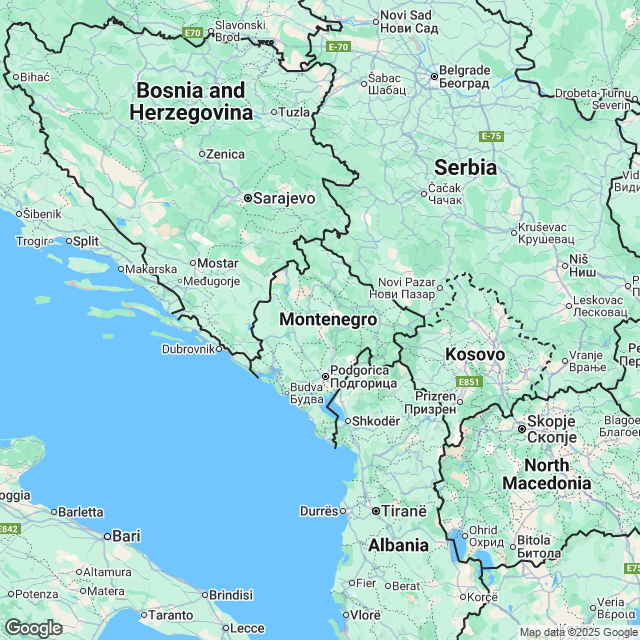
Serbia is found in the Central Europe that is Balkan Peninsula and southern Europe that is Pannonia plain. Serbia is 113th large place in the world as it contains a total distance of 88,361 km2, but it is 117th if Kosovo excluded. Its border includes Serbia, Bosnia and Herzegovina, Bulgaria, Croatia, Hungary, Macedonia, Montenegro and Romania. Drina and IBar was followed in the West and South West by Dinaric Alps.In the eastern Serbia, Carpathian Mountains and Balkan mountains are stretched in north-south direction. Rilo-Rhodope Mountain system is belonged by ancient mountains in the southeast corner of the country.Serbia's territory with 29.1% is covered by forest and is also considered to be a middle forested country. It is similar to world's forest coverage, which accounts for 30%, but is lower than the European average of 35% Oak, beech, pines and firs are most common trees found in the forest. The rich ecosystem and species diversity of Serbia covers 1.9% of the whole Europeans territory which is home to 39% of the European vascular flora, Europeans fish fauna with 51%, 40% of European reptile and amphibian fauna bird fauna with 74% and mammal fauna with 67%. It has many mountains and rivers which provide protection to all the animals, including wolves, lynx, bears, foxes and stags. The last regions in Europe, where bears can still live in absolute freedom in mountains of Tara in western Serbia. There are over 300 bird species in Carsha Bara.The last habitats of white head vulture in Europe is Uvac Gorge.
Climate of Serbia
The climate of Serbia is influenced by the landmass of Eurasia & Atlanti Ocean & Mediterranean Sea. It is humid subtropical climate with January temperature around 0°C & mean July temperature of 22°C. It has well distributed rainfall patterns & the climate is more continental. There is heavy inland snowfall in the mountains, the south, summers & autumns are drier but winter is relatively cold. Different elevations, proximity to the Adriatic Sea & large river basins & winds are responsible for climatic variations. The cooling of most of the warm air masses is the contribution of Dinaric Alps & other mountains. Pester plateau has harsh winters. A cold & very squally southeastern wind of Serbia is Kosovo, which starts in the Carpathian Mountains & follows the Danube through the Iron Gate.The average annual temperature is around 10.0°C of the area with an altitude of 300 to 500m & over 1000m is 6.0°C. In Serbia -39.5°C was the lowest temperature & highest was 44.9°C in Smederevska Palanka . Serbia has very high risk exposure to natural hazards. Floods in May 2014, was the most disastrous when 57 people died.
Tourist Attraction in Serbia
Tourism of Serbia is not a mass destination. Its tourists focus on the mountains and spas of the country. Christian tourists come to the monasteries of the country.The most important tourist places of the country are:1. Mountains and Spas
2. Kapaonik
3. Stara Planina
4. Zlatibor
5. Vryacha banjo
6. Soko Banjo
7. Banja Koviljaca
Serbia Culture
In Serbia's recent period more pop music elements were being featured in turbo-folk. A popular genre was the Balkan Brass (“trumpet”).An instrument used to wake and gather soldiers have been trumpeting, it was also used to transpose popular folk songs. Boban Markovic is best known for Serbian Brass musicians. The Guca Trumpet Festival is the most popular music festival. Most dynamic smaller European cinematographies is the Serbian cinema.Serbia Cuisine
Emir Kusturica is the most famous Serbian filmmaker who won two Golden palms. Serbian cuisine is heterogeneous and shares the characteristics of Balkans the Mediterranean, Merkish and Central European. During religious holidays such as Christmas, Easter and feast days that are slave food is very important. Bread, meat, fruits; vegetable and dairy products are included in Serbian diet. Bread also plays an important role in Serbian cuisine as it is the basis of all Serbian meals. To offer bread and salt to guests is the tradition of Serbia. Fish is mostly consumed in Serbian meal. Rakia is a highly alcoholic drink primarily distilled from fruit. It is also considered the national drink of SerbiaInternational Airports in Serbia
- Nikola Tesla International Airport
- NIS Constantine the Great Airport
- Pristina International Airport, Adem Jashari
- Uzice Ponikve Airport
Posted By : All Places Map Last Updated: August 31, 2015
Flag of Serbia Montenegro

Facts about Serbia | |
|---|---|
| Country | Serbia |
| Continent | Europe |
| Capital | Belgrade |
| Government | Parliamentary republic |
| Independence Day | 5-Jun-06 |
| Climate | Mediterranean and Temperate |
| Area | 88,361 |
| Currency | Serbian Dinar (RSD) |
| Dialling Code | 381 |
| Neighbours | Bosnia and Herzegovina, Bulgaria, Croatia, Hungary, Kosovo, Macedonia, Montenegro, Romania |
