



History of Saint Lucia
Saint Lucia was frequently visited by French pirates Francois le Clerc in 1550s. It was found that 67 colonists started a settlement in Saint Lucia which was called the Olive Branch and was blown off its way to Guyana. The island was officially claimed in 1635 by the French. The next European settlement was attempted by the English in 1639, and it was too wiped by Caribs. A permanent settlement on the island was established by French expedition which was sent out from Martinique. In 1664 Saint Lucia was claimed by Thomas Warner for England. When the sugar industry developed the island was found attractive by both the British and French. In 1712 Saint Vincent and Saint Lucia were granted second Duke of Montagu by George I of Great Britain. Saint Lucia was occupied for year by Britain during the 7 years war. At The Treaty of Paris in 1763 the island was handling back to French by Britain. Saint Lucia was headed by Captain La Crosse when the French revolution occurred. In 1794 the island French governor declared all slaves to be free. A battalion of British troops was defeated by Victor Hugues in 1795. The France and Great Britain continued what the British secured in 1814 ending the Napoleonic war as part of the Treaty of Paris. And it was considered the British windward island colony. After the mid 20th century, when the colony was dissolved West Indies Federation joined Saint Lucia. The full independence was gained in 1979 under Sir John Compton of UWP i.e. United workers' party who served from 1982 to 1996 as Prime Minister and was succeeded by Vaughan Lewis. From 1997 to 2006 the prime minister of the Labor party was Dr. Kenny Davis Anthony. The prime minister re-elected in November, 2011 was Dr. Kenny D. Anthony.
Geography of Saint Lucia
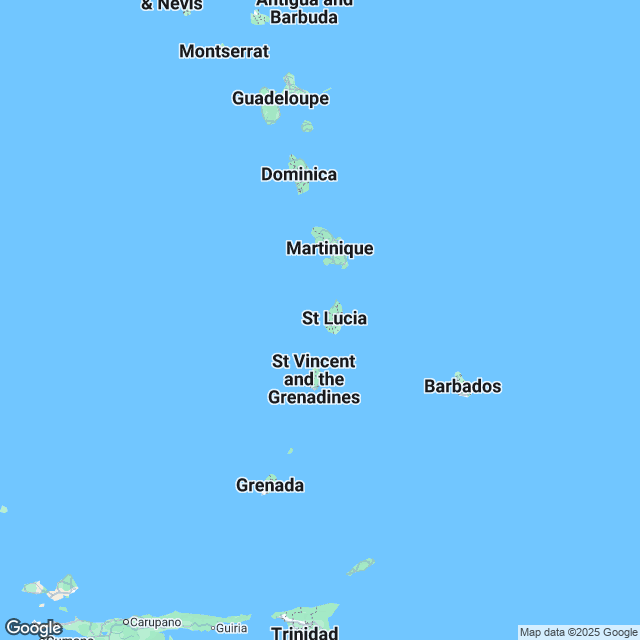
Saint Lucia is said to be more mountainous than other Caribbean islands. The highest point above sea levels at 950mtrs being Mount the Gimie. The island's most famous landmark is the Pitons, which is located between Soufriere and Choiseul. It is found in the western side of the island. Saint Lucia is considered as one among few islands in the world that boasts a drive in volcano. Castries where 32.4% of the population lives is the capital city of Saint Lucia. Gros Islet, Soufriere and Vieux Fort are the major towns of the country.
Climate of Saint Lucia
The local climate of the island is said to be tropical and moderate by northeast trade winds. On the island a dry season is found from 1st of December to 31st May. The wet season starts from 1st June to the end of 30th November. 29°C is considered to be average daytime temperature and around 18°C is considered to be average night time temperature. The temperature does not change much between winter and summer as it is very close to the equator. In the mountain rain forests average annual rainfall ranges from 1300 mm to 3810 mm on the coast.
Natural Resources in Saint Lucia
The various natural resources are forest, sand beaches, minerals and geothermal potential.
Tourist Attraction in Saint Lucia
Saint Lucia's tourism is vital for its economy. There is an increase in its economic importance as the market of bananas has become more competitive. During the dry season from January to April tourism tends to be more substantial. Due to its tropical weather, scenery and the numerous beaches and resorts the island tends to become more popular. The famous attractions of the tourists were volcano, sulpher springs, and the Botanical gardens etc.. As a part of cruise many tourists visit Saint Lucia. Soufriere, Marigot Bay and Gros Islet are popular locations to visit. But the tourists spend their most of the time in Castries.
Famous Hotels in Saint Lucia
1. Sandals Grande St Lucian Spa and Beach Resort
2. Lap Maison
3. Sandals La Toc Spa & Beach Resort
4. Royal By Ren Resorts
5. Lap Maison Resort and Spa
Cuisines of Saint Lucia
The national dish of Saint Lucia's was found to be green figs and salt-fish. Its cuisine has a unique blend of African, European and East India, which create dynamic dishes such as Macaroni pie, rice, peas, and hearty soups which seem to be packed full with fresh locally produced vegetables. The important stuffs are potatoes, onions, coconuts and milk. Due to its Indo-Caribbean population curry is very popular with a distinct Caribbean twist.
Culture of Saint Lucia
The African, East-Indian, French and English heritage influence the culture of Saint Lucia. Sir Arthur Lewis and Derek Walcots were the winners who come from Saint Lucia won the noble prizes in economics and literature. Jazz festivals are known as the biggest festivals in Saint Lucia which is held every year in early May and draws visitors and musician from the world. Cricket is known to be the popular sport in the country. The various music genres are the Saint Lucia's strong fold music tradition. Internationally hoisted renowned jazz festivals in 2013, was re-branded by Saint Lucia jazz & art festivals and the quite active dance group comes from the Caribbean in Saint Lucia.
International Airports in Saint Lucia
- George F.L. Charles Airport , Castries
- Hewwanorra International Airport, Vieux - Fort
There are also around a dozen domestic airports with flights to Kabul or Herat.
Posted By : All Places Map Last Updated: August 08, 2015
Flag of Saint-lucia

Facts about Saint Lucia | |
|---|---|
| Country | Saint Lucia |
| Continent | North America |
| Capital | Castries |
| Government | Parliamentary democracy |
| Independence Day | 22-Feb-79 |
| Climate | Tropical |
| Area | 617 sq km |
| Currency | East Caribbean Dollar (XCD) |
| Dialling Code | 1-758 |
| Neighbours | N/A |
